


Now Enrolling: The EA1242/RxFINE-Low research study is testing how to best prevent ER-positive, HER2-negative breast cancer from returning
August 17, 2026How blood tests are changing cancer research and patient care: Understanding liquid biopsies and circulating tumor DNA
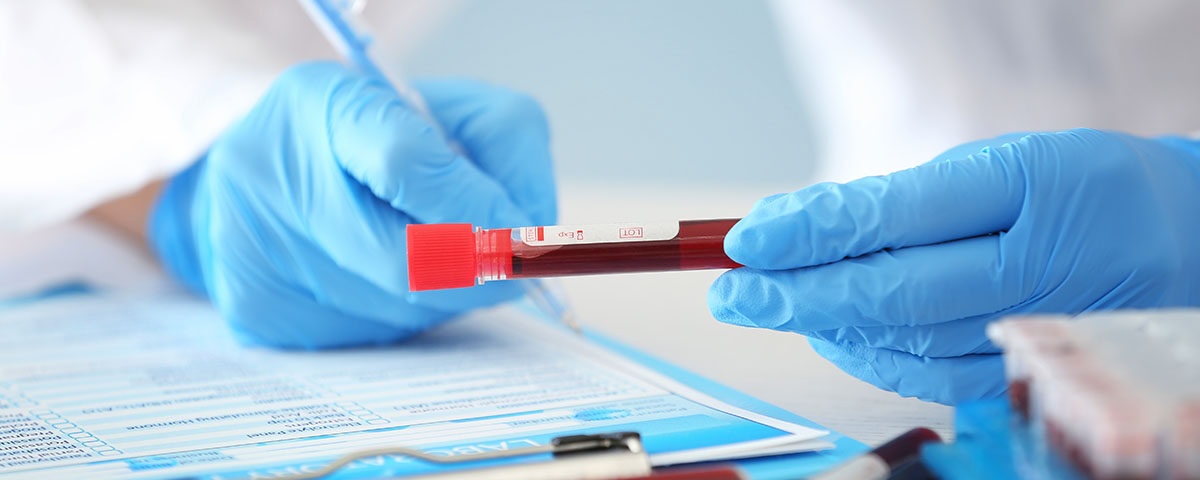
When cells in the body die as part of their normal life cycle, they release their contents into the bloodstream, including tiny fragments of DNA. Doctors can analyze these pieces of DNA to help guide the diagnosis and treatment of cancer.
Like healthy cells, cancer cells also shed DNA into the bloodstream when they die. These cancer-specific DNA fragments are known as circulating tumor DNA (ctDNA).
In recent years, scientists have developed sensitive blood-based tests, known as liquid biopsies, that can detect small amounts of ctDNA through a minimally invasive blood draw. These tests can provide information about a person’s cancer and may help doctors assess how well a treatment is working, detect signs that the cancer has returned (recurrence), and guide treatment decisions. As a result, ctDNA is creating new opportunities to advance both cancer research and patient care. However, their usefulness varies depending on the type and stage of cancer, and many potential uses are still being studied.
 Below, Dr. Valsamo (Elsa) Anagnostou (pictured) of the Sidney Kimmel Comprehensive Cancer Center at Johns Hopkins University’s School of Medicine explains what ctDNA is, how it is being used today, and what it could mean for patients in the future.
What is ctDNA and why has it become such an important area of cancer research?
ctDNA refers to small fragments of DNA released by tumor cells into a person's bloodstream. Because ctDNA comes from cancer cells, it can provide valuable information about a cancer, such as whether certain genetic changes are present, how well a treatment is working, and whether the disease has returned or changed over time.
Detecting ctDNA in the bloodstream used to be like finding a needle in a haystack. But today, advances in technology make it possible for a liquid biopsy to detect very small amounts of ctDNA in the blood. Unlike a traditional tissue biopsy, which requires surgery or another procedure to remove a tumor sample, a liquid biopsy only requires a minimally invasive blood draw.
Not only is a liquid biopsy easier on patients, but it can also be repeated as needed over time. This may allow doctors to monitor changes in the cancer throughout the course of a patient's treatment.
How is ctDNA being used in patient care today? How can it help guide treatment decisions?
Doctors are already using ctDNA in several well-established ways in cancer care. For some targeted therapies, liquid biopsy tests are included in the US Food and Drug Administration (FDA) approved indications, allowing doctors to use a liquid biopsy to determine whether a patient can receive that treatment. Also, doctors’ clinical guidelines sometimes recommend using a liquid biopsy for certain types of cancer, when tumor testing is not possible.
For example, a patient with non-small cell lung cancer that has spread to other areas of the body (metastatic) may need genomic testing. If their cancer cells contain specific genetic changes, they may be eligible to receive treatment with special medicines called targeted therapy. Rather than waiting for tumor tissue to be collected, doctors might be able to get the DNA sample they need for analysis more quickly from a blood draw.
Another use for liquid biopsy testing may be to help doctors monitor how well treatment is working. Although the FDA has not yet approved a liquid biopsy for this purpose, researchers are studying this in several ongoing clinical trials. The idea is to use ctDNA to guide treatment decisions throughout a patient's care, helping doctors decide when treatment should stay the same or change over time.
Can ctDNA be used for cancer screening?
Researchers are actively studying whether liquid biopsies can help detect cancer at its earliest stages, sometimes before symptoms develop. However, this is not yet a standard method for cancer screening. While this approach holds promise, detecting very early-stage cancer remains challenging because there may be only tiny amounts of ctDNA in the bloodstream. Scientists are also working to improve test accuracy and reduce false-positive results.
Although some early detection tests are commercially available, more research is needed. For example, we need to understand how best to use the tests and whether they improve patient outcomes, such as detecting more cancers at a curable stage or reducing cancer deaths. For now, a liquid biopsy is not a replacement for recommended cancer screening tests, such as mammograms, chest CTs, colonoscopies, or cervical cancer screening.
How are liquid biopsy and ctDNA changing the way that researchers design and conduct clinical trials?
Researchers are exploring several new ways to use ctDNA in clinical trials. Doctors usually measure how well a treatment is working by imaging scans, physical exams, and laboratory tests. While these tools are important, it can take weeks or months for scans to show whether a tumor is shrinking or growing. Also, scans do not always give a complete picture of how the cancer is responding to therapy.
In contrast, ctDNA may provide an earlier and more accurate sign of how the cancer is responding to treatment. As such, researchers are designing clinical trials that study ctDNA testing for this purpose. These trials are ongoing for patients with early-stage disease as well as those with advanced cancers.
What advances in ctDNA are you most excited about and what could they mean for future patients?
The long-term vision is to use liquid biopsy testing and ctDNA monitoring throughout the course of a patient's treatment to determine, as early and accurately as possible, whether a therapy is working. If a treatment is not working, doctors may be able to adjust the strategy sooner, when there is still an opportunity to improve outcomes.
We also envision that liquid biopsy testing will show why a treatment is no longer working by detecting genetic changes, as well as other changes that affect how genes function, to better understand why the cancer becomes resistant to treatment. Ultimately, the goal is to obtain all of this information from a blood draw, allowing doctors to monitor the cancer’s response to treatment, understand how a cancer is changing over time, and adjust treatment plans when needed.
Dr. Anagnostou chairs the ECOG-ACRIN Cancer Research Group’s Data Science Committee. She also co-chairs the Lung Biology Subcommittee, which is part of the Thoracic Cancer Committee.
At Johns Hopkins University, she runs the Anagnostou Lab, dedicated to advancing cancer research by unraveling the genomic landscape of response and resistance to cancer therapies, with a focus on immunotherapies. She writes about evolving concepts in liquid biopsies and cancer genomics on her Substack.
